Sleep Number’s Linda Findley on her rise from communicator to CEO
Insights from Linda Findley at Page’s Spring Seminar 2026.
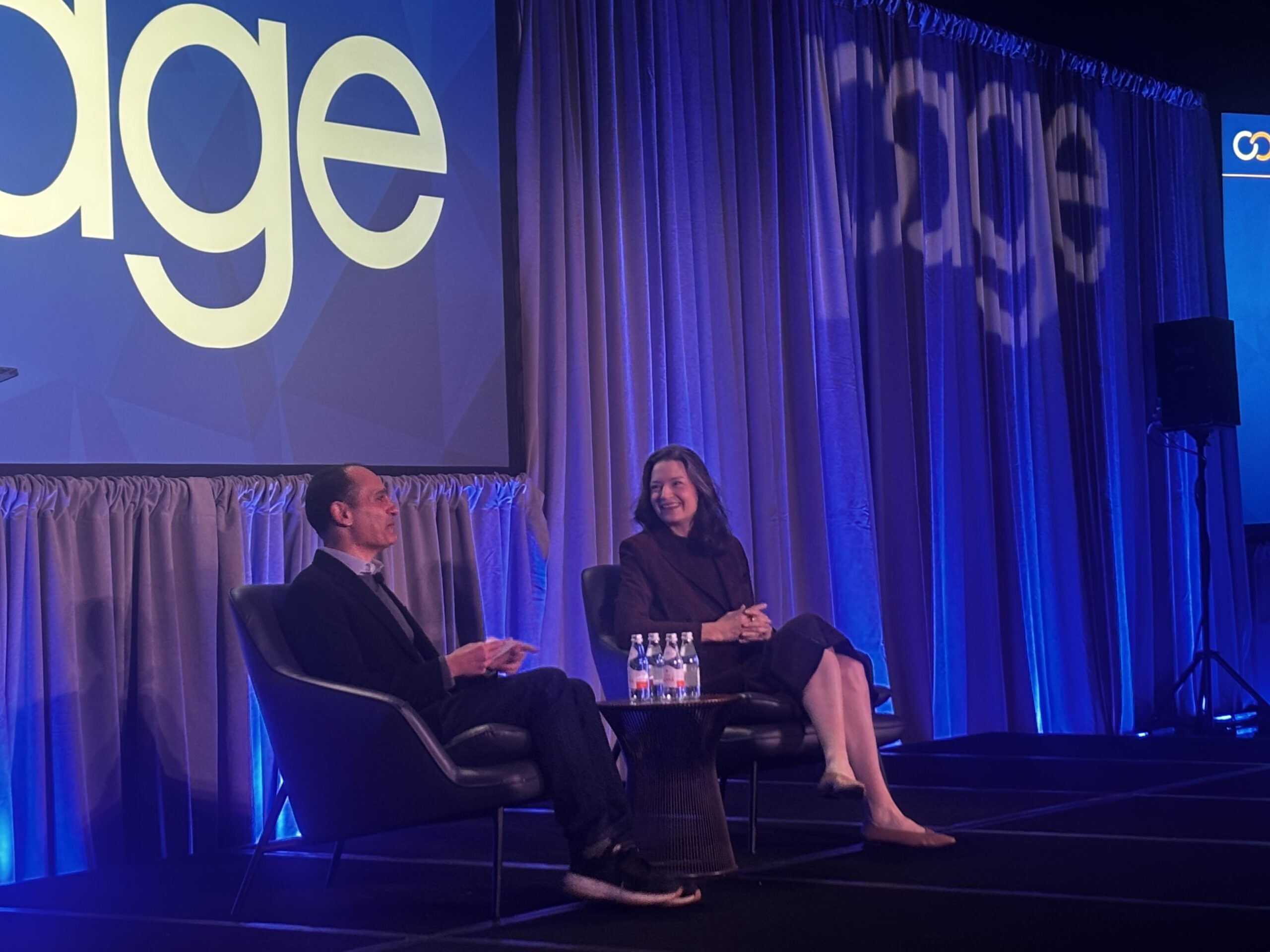
During the Page Spring Seminar 2026 in New York City last week, Linda Findley, CEO of Sleep Number, told the audience that her journey from communications practitioner to the top of the C-suite challenges the assumption that comms is a support function. She argued that in reality, it’s the key to effective leadership.
“As long as you have more than one person in the room, someone’s going to misunderstand something,” Findley said. “Communications and good leadership are about clarity, focus and everyone knowing what page they’re on.”
She emphasized that communications as a function isn’t adjacent to leadership — it is leadership.
“I’m still a communications person, because one of your most important jobs as a leader is anticipating the next question,” Findley said. “Being able to answer the next question as an executive is just as important as it is in communications. But instead of just saying, ‘Here’s what we need to say,’ that becomes, ‘What are people thinking? What are people wondering?’”
High-level leadership comms that consider small details
During her conversation with Phil Wahba of Fortune, Findley shared the details of her rise through the ranks of the communications field. She was trained as a journalist and started her career in the comms function at Alibaba in Hong Kong. She said that one of the most important lessons she’s learned in comms roles is the need to know the small details of the operation to communicate credibly to both employees and customers.
“Early in your comms career, you do a lot of the basics,” Findley told the audience. “You do a lot of the hard work, and I actually think that level of detail helps you be better than anything else you do. Whenever I join a company, I get very, very in the weeds.”
She added that getting in the weeds sometimes means rolling up your sleeves and doing work that goes beyond putting messaging together.
“At Blue Apron, I would pack boxes every quarter for a full shift, 10 to 12 hours in a 38-degree packing facility,” Findley said. “You learn so much about how things get to the customer and how employees are experiencing the work. That detail from your early days always matters.”
Managing turnarounds and internal comms
Findley also noted that many leaders face communication challenges when they join an organization during a turnaround. Rather than diagnosing issues for employees, Findley suggested that leaders use their communication skills to give people a chance to surface their own solutions.
“Instead of coming in and saying, ‘You should have done this and this is wrong,’ I come in and say, ‘What is the thing you always wanted to do that you were held back from doing, and why?’” Findley said. “You get the same answer from people that you get from saying, ‘Why didn’t you do this?’ But now, all of a sudden, they’re bought in. When you come into a turnaround, 70% if not more, of the people in the company have been trying to figure out how to fix it themselves, so inviting those opinions in makes it much easier to bring people along, because you’re actually listening to them, as opposed to telling them.”
Findley also said that leaders need to look at their employees as more than an internal audience they can communicate with. They’re also the key to a competitive advantage when it comes to organizational branding.
“Your employee base is sometimes also your shareholder base, and your employee base is your biggest voice,” she said. “The happier they are, the prouder they are and the clearer they are on what you’re doing, is like free advertising. They’re just going to be out there talking about the company.”
Findley closed by saying that internal communicators and leaders are not just sharing information, but making sure people understand it and can act on it. That’s a critical component of any business.
“If employees don’t know what the problem is, then they can’t help,” she said. “And people are much more willing to try to contribute and try to turn something around if they understand both what they need to do and that they’re not being lied to.”
Sean Devlin is an editor at Ragan Communications.