She changed everything by saying ‘thank you’
Mentors change you.

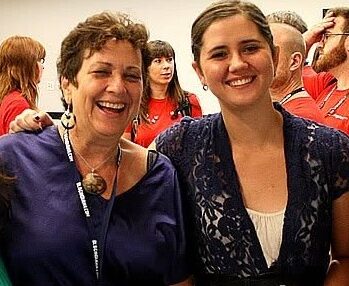
It didn’t matter what the day was like. Even if I’d made a mistake, even if we lost a big client, nothing changed.
Every day as I passed by her office to leave, Lorraine Ball would stop whatever she was doing and yell in her Brooklyn accent, so incongruous in suburban Indianapolis, “Thank you! See ya tomorrow!”
And every day, she meant it. It meant the world to me, too: It meant that my effort was seen and appreciated, even if it wasn’t perfect. It’s an ethos I try to carry forward today in both my personal and professional life.
Lorraine was my first professional boss. She remained my most important mentor for more than a decade until her death last week.
Scratch that. She still is my most important mentor. She’s just a little more distant now.
Great mentors like Lorraine are vital — and something that is too often lost in the chaos of our lives today. A survey from Olivet Nazarene College found that only 37% of people have mentors. That’s a missed opportunity for both sides in the mentorship equation.
The less-experienced party’s loss is more obvious. They miss the chance to learn from someone who knows the industry, knows the job and who’s made their fair share of mistakes. They don’t have the opportunity to learn what kind of boss they want to be. They might miss a cheerleader, like when Lorraine told me, “You got this” whenever I described my next career move. Knowing that someone believes in you can make all the difference.
But the more experienced party loses out too. They lose out on many of the same things: learning from someone with different life experiences, who can help keep them up-to-date on developments they otherwise might not be aware of. While this is the nature of any good relationship, it has a formal name now: reverse mentorship. We practiced this when I introduced Lorraine to Pinterest as a marketing tool shortly after its release, or later when we swapped tips on how we were each using AI.
Many companies set up formal mentorship programs — which is awesome. And it’s in the company’s best interest, too: that same survey found that people with a mentor at work tend to be happier than people without.
Yet in many cases, the mentor-mentee relationship grows naturally. Only 14% start with a formal ask. Most just start when one cool person takes another under their wing, and the exchange happens based on mutual respect.
If you want to be mentored, keep your eyes open for the people who act and move in ways you admire. These people may not have the exact job title you hope to attain one day, but they might have a personality similar to yours that can help you grow. They may have specific skills you lack — for instance, great executive presence or a whiz at metrics.
Then ask them out for coffee. Or if you’re like Lorraine and me, Thai food.
You don’t have to make a big deal of it and make a formal ask. Just say you’re curious how they achieved XYZ. Or you want their advice. People love being asked for their advice.
And if you’re a more experienced person looking for a reverse mentor? The exact same process applies. Just look for that scrappy, slightly rough-around-the-edges junior and see what you can learn from each other over a meal, a drink or a desk.
And maybe when you do, when you find someone wonderful to learn and teach? Think about Lorraine. I will be.
Thank you, boss.
Allison Carter is editorial director of PR Daily and Ragan.com. Follow her on LinkedIn.