Ragan and PR Daily’s 2025 word of the year: Slop
And other sticky selections from across dictionaries and media.

Each year, the editors of Ragan Communications and PR Daily select a word that captures the climate that communicators have navigated (or endured, as the case may be) over the past twelve months.
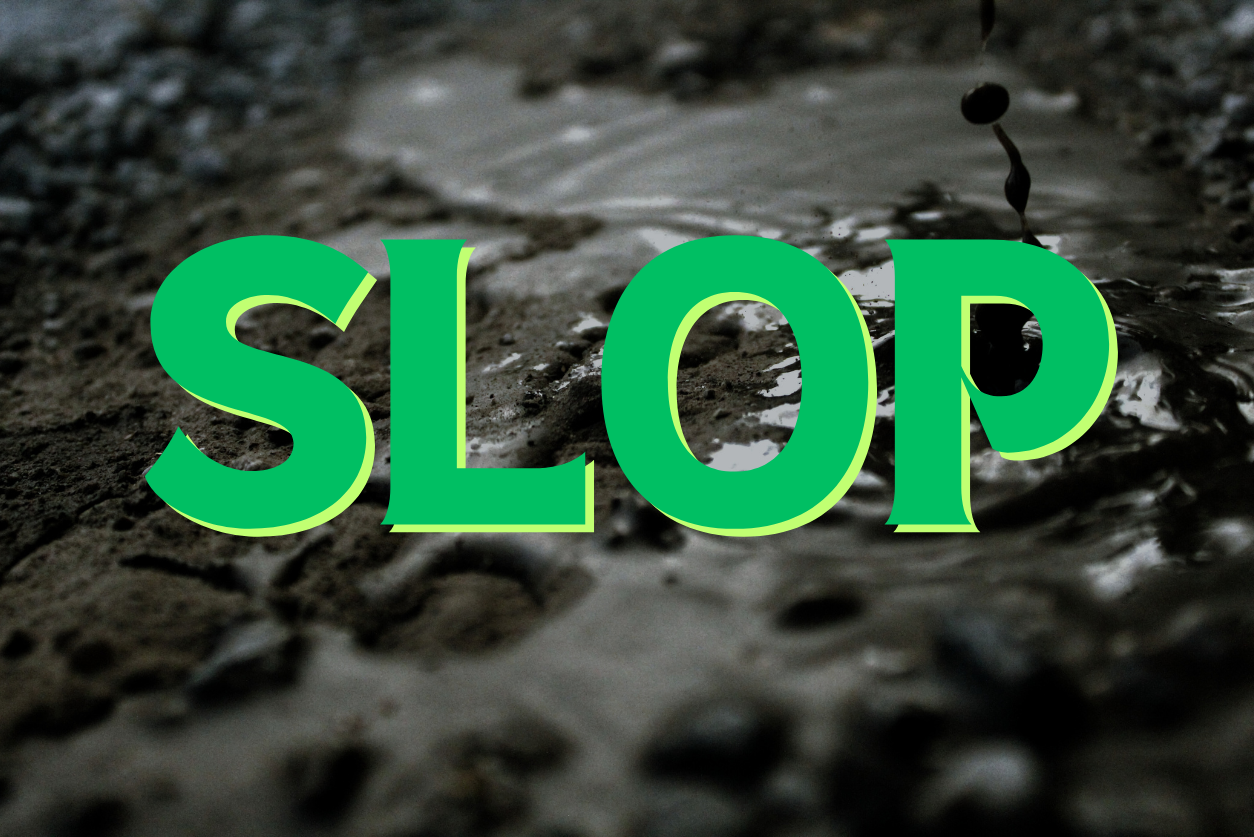
We’re serving up slop as our 2025 word of the year.
In English, it first surfaced around the 1400s as a noun for mudholes and dung-heavy detritus. From the 1600s to the 1800s, it came to encompass unappealing food, household waste, and so on. “Slop” covered dishwater, street rinsings and pig feed, and, as a noun and a verb, later slumped into slang for splashings of cheap beer and sentimental writing.
And in true form, today, it has come to refer to online content served in endless volume with little clarity or intention, material designed to keep eyes moving without giving the mind something meaningful to hold.
“AI slop” in particular started appearing around 2022 across internet spaces discussing the low-quality, mass-produced AI output that accompanied the first wave of accessible conversational AI tools and image generators. (It follows in the spiritual footsteps of online “spam,” so called after a Monty Python’s Flying Circus sketch in which the name of the canned meat product is repeated over and over again.)
Ragan Communications and PR Daily selected slop as our word of the year because it is the enemy and antithesis of comms messaging and the muck that communicators have to wade through to get the word out in a meaningful and effective way.
This low-quality bot content has muddied the ability to distinguish reality from fiction and has compromised trust and authority. It seeps through social platforms, political discourse and inboxes, vying for the attention of audiences already up to their eyeballs in claggy content clutter. Slop can pull comms teams off course when the need for speed overtakes diligence and substance, or when bot replies gunk up social listening pipelines.
But this moment does present communicators with a rare opportunity to rise above the muck by embracing thoughtful, original research and storytelling, branching out from formulaic and repetitive tropes, and committing to the craft of writing and design with a distinctive voice and vision.
And to their credit, many communicators have worked to uphold clarity and credibility. Teams with clear brand voice guidelines, rigorous editorial processes and candid leaders stood out. Those who took time to listen, to understand real audience needs, and to clean the message before sending it forward built stronger internal culture and stronger public trust.
Slop may bespatter the online quagmire in which you tread, but audiences reward communicators who avoid it and actively work to reduce it. Precision, humanity, humor, relatability, education and clarity empower communicators to squeegee away the weariness of content overload for audiences.
More words of the year
We are not the only ones to observe digital turbulence with our word of the year. Across dictionaries and media, several themes emerged as 2025 wrapped itself around another year of cultural churn.
- Oxford University Press selected “rage bait,” or content designed to provoke anger for the sake of traffic or engagement.
- Cambridge Dictionary selected “parasocial,” which describes one-sided connections that form between fans and celebrities, influencers, fictional characters, AI chatbots and, yes, even brands.
- Much to the chagrin of those who declare it not-a-word, Dictionary.com selected “6-7,” a brain rot-borne meme phrase and hand gesture combo which means a lot of things, from a shrug to a vibe to a sports joke.
- Collins Dictionary selected “vibe coding,” a way of producing code through natural language or intuitive prompting, acting as a director using plain English while an AI tool carries out tasks.
All of the above point to a vast and murky digital future in which messaging mishaps and content overload are the norm, and in which communicators must do their best to stay AI-literate, but also true to ourselves, our voices and the beating hearts that make up our organizations.