Here’s what employees really need during any change
Emilie Bingham of ShipStation Global shares how she keeps messaging simple during uncertainty.


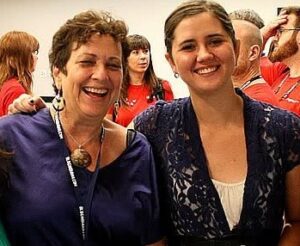
Emilie Bingham, senior director of communications & brand at ShipStation Global, helps small and mid-sized businesses ship their products efficiently. She has led the company’s internal communications through acquisitions, restructurings, leadership changes and, most recently, a company-wide merger and rebrand.
Join Emilie and comms leaders from MGM Resorts International, St. Jude Children’s Research Hospital, ShipStation Global and more for Ragan’s virtual Change Communications Certificate Course on Oct. 22, 29 + Nov. 5. Register now.
You started your career in book publishing and did some ghostwriting before moving into tech communications. What did that world teach you about storytelling that you still use today?
Even before I worked in publishing, I worked at my college’s writing studio and helped other students with their papers. From that experience through ghostwriting full-length books, I became fascinated with the connection between writing and thinking.
For many, writing is a means for deep thinking — especially today. When we sit down to write anything (a blog, a social post, a strongly worded email), we either think about what we’re going to say before we start typing or, more likely, we use the act of writing to get clear on what we want to say.
The risk here is hitting send too quickly. It’s in making the reader wade through your thought process to get to what they really care about. In my current role leading communications and brand for ShipStation Global, I rarely publish anything without a quick gut check: is the audience getting what they need from this piece? Can we say it more directly?
You’ve helped communicate through acquisitions, restructurings, leadership transitions and a merger. When employees are facing uncertainty, what have you learned they need most from communicators and leaders?
The short answer: consistency and humanity.
Think about the last time that you were caught by surprise or your emotions were heightened. It’s really hard to retain information in moments of stress or surprise. Especially following a major event like a leadership change or restructuring, keep the messaging simple and repeat it often. It takes time to sink in. Even better? Center that message around a shared goal and give yourselves opportunities to get some quick wins toward it. And when new leaders step in, offer up opportunities for employees to get to know them, whether through town halls, an office roadshow, a video series, etc.
What’s one piece of career advice you received early on that you still use?
In my first corporate job, I was called out by a vice president for not speaking up and asking questions in a meeting. I was two weeks into the job and had no idea what he was talking about — and he kindly reminded me that I was allowed to be new and to have questions.
Since then, if I’m lost, I say so. If I have questions, I ask them. No matter who’s in the room. We all have a right to be new at something, to need clarity, and to get the information we need to do our jobs well.
During a reorganization or workforce change, communications, HR and leadership can all be working from different priorities. What does strong partnership between those groups look like when the stakes are high?
During moments of major transformation or restructuring, there’s a tendency to place heavy emphasis on the first communication that goes out. It can feel like the most tangible thing to work toward as a group. The most successful partnerships don’t work backward from a single email or message. They start with a statement of facts: we’re making X changes on Y date for Z reasons. From there, a communications team can develop key messages, identify all audiences to be reached, and craft a series of communications. Also, developing a more comprehensive plan before communications ever starts drafting gives the team a chance to spot potential issues with the business plan early.
What’s a communications mistake you’ve made that you can laugh about now, but definitely weren’t laughing about at the time? This is a safe space.
Misspelling an executive’s name in an all-company email. More than once. Always double-check names. Always.
What’s something outside of work you’re unusually passionate about, competitive about or could talk about for far too long?
I’ve taken a few pottery classes. I’m terrible at it, but I love to talk to my friends about the beautiful bowls and vases they made and how they did it.
What are you reading, watching or listening to right now that has absolutely nothing to do with communications?
I just started reading American Fantasy by Emma Straub about a woman who goes on a boy-band-themed cruise ship. I hope it’ll be the perfect end-of-summer read.
Isis Simpson-Mersha is a conference producer/ reporter for Ragan. Follow her on LinkedIn.