Stories of ‘badass do-gooders’ are the secret weapon of UNICEF USA CMO and Top Women in Marketing Hall of Famer
Learn how Diamond is helping to update an iconic brand.

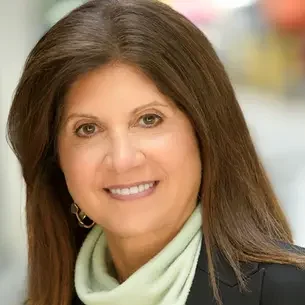
Ask people of a certain generation about UNICEF, and many will tell you about the little orange box they carried while trick-or-treating to help raise money for the organization. Shelley Diamond would like them to also know about the nurses who helicopter into northern Nigeria, risking their lives to safely deliver babies.
As chief marketing officer at UNICEF USA, Diamond has made it her mission to close the gap between a brand everyone recognizes and the important work they do. Her strategy is to spotlight the “badass do-gooders” who reach children when no one else can, and to market the nearly 80-year-old organization with the same focus on trust, relevance and reach she brought to commercial brands. That work has earned her a place in Ragan Communications’ Top Women in Marketing Hall of Fame. She’ll be honored for her achievements during Ragan’s Top Women in Marketing Awards Ceremony in New York City on Oct. 22.
Ahead of that celebration, Diamond sat down with Ragan to discuss her drive, her career and what she wishes you knew about her. The conversation has been edited for brevity and clarity.
You were doing ESG before ESG was a thing. What interested you in that, and what prompted you to get involved before it was even really developed?
My mom was born in Berlin, Germany, and you can imagine back then what it was like. She and some of our family made it to this country, far too few, and they had to build themselves up from the ground up. They believed so much in the power of positivity and what you could build, and any help that they got along the way, the people that brought them really from having nothing to my grandfather having a flourishing business. It was all done because people in the community helped them.
So it was always part of my DNA. When I was in high school, I was doing things around women’s reproductive rights at a pretty young age. When I was in college, I volunteered for Planned Parenthood. When I was 13 years old, I was a candy striper at a local hospital. It just made me feel good, and it also felt like my family is here by the goodness of others, and I want to give back. So that was kind of what I came into the business world with, and in the beginning, head down, nose to the grindstone.
It just feels like it’s what I was put on earth to do.
You’ve mentioned that you treat non-profit marketing and communications like a business. What does that mean in practice?
It’s the same principles that apply. You have a brand, you have to build trust. You have to have relevance. If it doesn’t fit into my life, then the brand is never really going to expand, and there has to be something compelling about what you have to offer.
You have a brand, UNICEF, which is very powerful. We’re UNICEF USA, so there’s a bit of a distinction there. We have a brand that is very trusted, but not particularly relevant. We have a brand where everyone knows us, but no one really knows us and what we actually do. And people of a certain generation know us as that brand: “Oh, I trick-or-treated for UNICEF.” And they remember that little orange box, and whatever happened to that orange box. It’s like, oh my goodness, we are so much more than that.
So we have a receptivity, but we have to do a lot better job of differentiating ourselves versus all the other potential places that you can give your dollars to, making sure that there’s clarity around what we do, which is magnificent. We probably are the world’s largest children’s humanitarian organization, period, full stop. And we probably have saved more lives than any other nonprofit in our space. Those are great bragging rights, but people don’t know it.
The second thing is relevance. We’re doing something for kids who live on the other side of the world. How do we make that relevant to (someone), who’s very involved in her local community, who knows that this country has massive needs and says, “If I’m going to do something, I’m going to do it within my own community. And yes, I care. I care about the world’s children, but I have to care about children here first”? How do we make it really compelling that you can do both? Because a child is a child wherever they are. We already know you care about children. We just want to give you some information so you could care about children all over the world, and that’s marketing.
Then the third piece of that is how do we reach these people? Coming out of the paid media world, the digital media world, the social media world, understanding ambassadors and influencers, and the importance of having something that’s relevant in the news, in the press. That is the foundation in the nonprofit, because you don’t have the money to be able to beat any other brands.
You call your approach to storytelling at UNICEF as elevating ‘badass do-gooders.’ How did that come about?
People trust us, but what they don’t have is knowledge of us. We’re not differentiated. What makes us different than any other organization that is doing things to benefit children?
Well, you know what? It’s the people who get to those children when no one else can get to them. It’s the nurses that helicopter into northern Nigeria, where they put their life at stake in order to safely deliver babies. It’s getting education into populations where young girls can’t learn, but we find a way to work with the ministers of education. We are badass, because we’re putting our life on the line. We’re smart. We’re resourceful. We’re innovative. We may be an old brand, like 80 years old, but in our thinking, we are forward thinking. We are solutions oriented.
So how do you sum all that up? If you’re gonna support UNICEF, you’re gonna support badass do-gooders who get where it needs to go. We call it at the speed of need. We can get there, with the scale and the scope. And when you start showing people how badass we are, they’re like, “Whoa! So you’re not just that little orange box, that thing I remember from my childhood. You’re actually an incredibly forward-thinking, intelligent, differentiated, innovative brand that’s also highly empathetic.”
Tell me more about the little orange boxes, because that must be kind of a double-edged sword in a lot of ways. How have you built on that nostalgia while still moving forward?
Parents want their children to care about what’s happening to other children in the world.
This is a child’s first chance to be philanthropic, and as a parent, that really resonates, because you did it, and you need to give your children that opportunity. But the big barrier is we can’t give out those boxes in schools anymore, because teachers don’t have time to take them and distribute them. Anyone who’s familiar with how hard it is to be a teacher knows this is not high on their list. Some will, but we don’t have that natural distribution point.
So what we did is we made it available online. We give people the opportunity to actually order the boxes so they can take them around, to make it easy for them to give money. But the most important thing is to show their children what that money is being used for. You can see that child who’s going to get a blanket or who’s going to be able to have safe drinking water, to really connect it to the need and how that money actually addresses that need. So we’re making it more tangible by creating an online experience as well as offline.
You’re passionate about mentorship, particularly mentorship of women. Tell me some of your most powerful mentorship moments.
For me personally, there were two women who gave me all of the support I needed. One of my accounts was Xerox, and there were two women there: one who was the CEO and the other who was the head of marketing. I had three little kids, I had just moved and I was now commuting, and they were the most supportive. At the end of the day, if I couldn’t get there, they would have me have meetings in their offices.
They made it very clear to my management that I was their person. So when they tried to promote someone else, which did happen, they both came to bat. It’s hard to resist the CEO and head of marketing when I’m running marketing for her. This is what they actually said: “We want you to promote Shelly to be the managing director of our business.”
And they supported me all the way through, including my personal life, where there were just times that I could be really honest about what I could or couldn’t do at that moment in time, and they gave me so much confidence that it’s OK. It’s OK if you come to work frazzled. Because you were appreciated for your talents. You were not judged. Your ambition wasn’t judged based on having a family and creating some balance. So the two of them absolutely changed my life.
What is something else you want to make sure that our audience knows about you or about your work?
I’m a cheerleader for my team, but my family is the most important thing. Truly, my work family. But as someone once said, you may love your work family, but then you go to your new work and they’re your family, right?
I have three children now. They’re each married, so there’s six of them. I have six grandchildren, and I’ve been married to the same guy forever. I went kicking and screaming from the city to the suburbs, because I grew up in Brooklyn. I really grew up in Brooklyn, with a family that didn’t have a lot of money, and they taught me independence. My mom got divorced when I was rather young, and she just said to me, “Get an education, get a job, have a career.” My dad too; he supported that. My grandfather and my grandmother, too. They just gave me the sense of, I can do this.
So all the work stuff, listen, I’m so proud of that. And doing that and building an incredible family, and looking at these six little people, I think, “oh my God, how did that happen?”
Join us at the Top Women in Marketing Awards Luncheon.
Allison Carter is editorial director of PR Daily and Ragan.com. Follow her on LinkedIn.