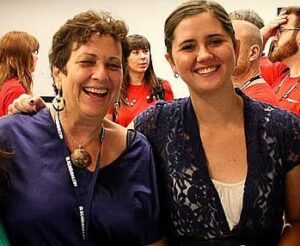
‘Do the job, build the job, explain the job’: Inside State Farm’s first CCO role
Proving a brand-new seat at the leadership table takes constant, intentional work, and a habit of showing rather than telling.


Michelle Russo never planned to end up at a century-old insurer. In college, she pictured herself running communications for a media company. She got there, but only after detours into politics and policy that she now counts as her biggest advantage.
Now, Russo is State Farm’s first chief communications officer, a job she’s building while doing it. She leads strategic communications, brand reputation and stakeholder engagement, all rooted in the company’s promise to be a “good neighbor.” She and her team tell purpose-driven stories that connect State Farm with customers, employees, agents, media and communities. Before State Farm, Russo was chief communications and marketing officer at the U.S. Chamber of Commerce, where she reshaped its brand, media, digital and thought leadership work.
Meet Russo and learn how communicators can build a brand-new leadership role while proving its value along the way, alongside comms leaders from Lockheed Martin, United Airlines, IBM and more, during Ragan’s Future of Communications Conference at the Hyatt Regency Austin, starting today and running through Nov. 13.
You’ve worked in presidential campaigns, a federal regulator, a global media company, the country’s largest business advocacy group and now a 100-year-old insurer. What’s the thread that connects those moves, and was there a moment when you realized your career was headed somewhere you hadn’t planned?
Throughout my career, I’ve been driven by curiosity, passion and purpose. I’ve pursued opportunities for which I wanted to learn more about the organization or industry and to help them articulate their purpose to constituents, customers and communities. In college, I imagined my future as the head of communications for a media company, but I didn’t follow a linear path to get there. I allowed my curiosity to lead me, even if that meant arriving at a different destination.
It turned out my zigs and zags into politics and policy work made me a stronger candidate for the role in media. Then that experience in leadership for a global company gave me a unique perspective to bring to the biggest advocate for American business — the U.S. Chamber of Commerce. And helping companies navigate complex political and policy environments paved the way for joining an iconic American company as its first CCO.
As the FCC’s spokesperson, you served under both Democratic and Republican leadership. What did that teach you about credibility and staying steady when the people around you change, and how does it show up in your work today?
It taught me the importance of staying true to your organization’s North Star and letting that guide you rather than altering course based on whichever way the political winds are blowing.
Your session at Future of Comms is “Building the Plane While Flying It: Inside the First Chief Communications Officer Role.” What’s one thing about being the first CCO that surprised you, and what’s one decision from your first months you’d make the same way again?
I was told by the recruiter I would need to do three things at once in this role: do the job, build the job and educate the organization about the job. The most surprising has been how the educating part needs to be a continuous and intentional effort. One of my favorite rules of thumb is “show not tell.” So I work to demonstrate the value of having a CCO at the leadership table as a strategic partner, not only to focus on communications decisions, but also to provide perspective on all major business decisions.
When I started, I decided to focus on the horizontal view — what does the company need at the enterprise level and how can I help? I’d make that decision every time because it allowed me to demonstrate value and gave me more context when I turned my focus to building the impact of the communications function.
What’s the one takeaway you hope people leave your session with?
Follow your passion and curiosity — if you’re interested in something, you will be more successful at it. A litmus test for me in exploring new roles: I ask myself if I’m excited to do the homework to prepare for the interview. If not, the job itself is going to be a slog.
What’s one tool you use every day for work (excluding AI & phone)?
I try to use humor and levity. These jobs can be a pressure cooker, and laughter is a great release valve to clear the way for clear thinking, agile problem-solving and fostering creativity and innovation.
What’s the best piece of career advice you’ve ever received?
We teach people how to treat us.
Isis Simpson-Mersha is a conference producer/ reporter for Ragan. Follow her on LinkedIn.