How Visit Philadelphia turned 3,000 voicemails into 2 million impressions
How to create audience engagement that feels natural.

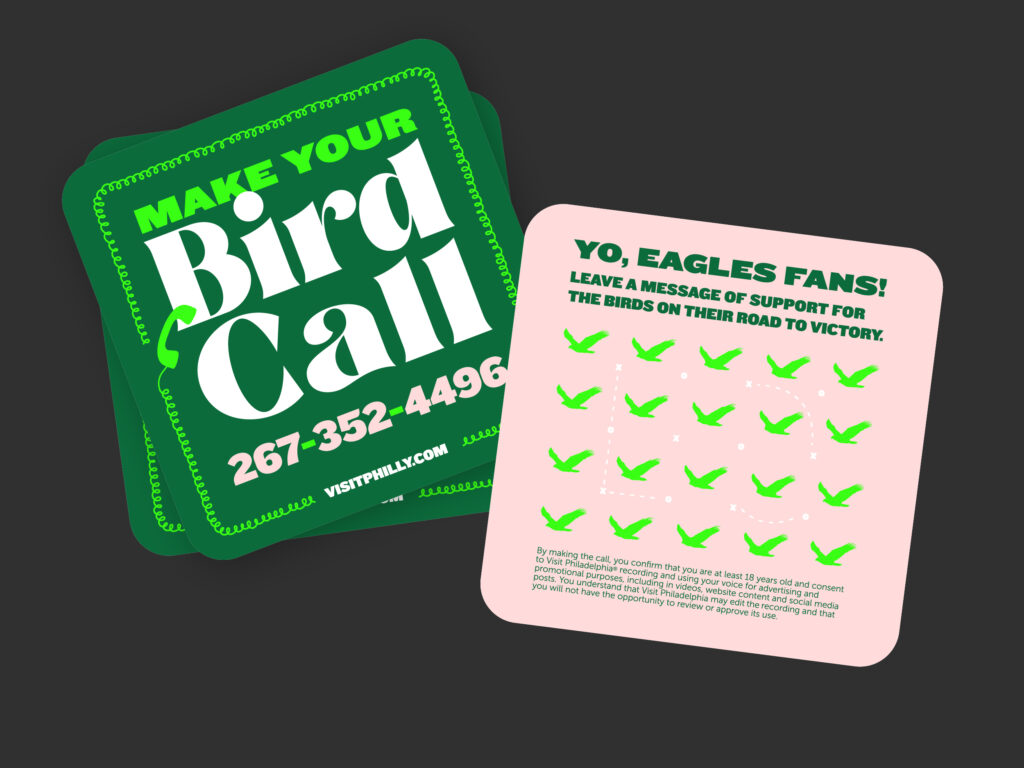
When the Philadelphia Eagles snagged a trip to the 2025 Super Bowl, Visit Philadelphia gave fans a phone, a number to dial and a directive: Leave a message for the team.
People immediately dialed in with encouragement, rival-team insults, actual bird sounds and a major promise.
“One person said, ‘I’ll name my first child after Jalen Hurts if you win,’” said Eric Cortes, senior director of social media at Visit Philadelphia.
In about two weeks, the tourism organization received nearly 3,000 voicemails. It turned those calls into social videos, a tribute to the city, and a campaign that generated nearly 2 million impressions, 1.5 million video views and more than 130,000 engagements.
It worked because Visit Philadelphia didn’t ask fans to promote the city. It gave them a way to share genuine excitement and let their voices drive the story. The campaign showed how communications teams can build audience participation into their work without making it feel overly promotional.
Save good ideas before you need them
In the summer of 2024, Visit Philadelphia’s director of photography and videography attended a PGA event and saw a rotary phone where visitors could leave messages for their fathers. The recordings were later used in an emotional Father’s Day video.
He shared the idea with the social team, but the organization didn’t have an immediate use for it, Cortes said.
Months later, as the Eagles moved through the playoffs, the team returned to the concept.
“Ideas don’t need to be new to work,” Cortes said. “They just need the right moment.”
Visit Philadelphia took the idea, adapted the format and connected it to a moment that mattered to its audience.
Comms teams should keep a shared file of interesting ideas, audience reactions and other campaign examples. Record why each idea worked or what was interesting about it. A great idea could sit unused for months before you find the right time to use it, Cortes said.
“The idea may not be for tomorrow,” he said. “But it could be for a year from now.”
Make it easy for people to participate
As the Eagles kept winning, Visit Philadelphia placed rotary phones in five high-traffic locations and opened a number that anyone could call.
The prompt was intentionally broad, Cortes said. It was just, “Leave a message for the Eagles on their road to victory.”
Participants didn’t have to share their name or location, but they were aware the recordings could be used elsewhere. A legal disclaimer explained that some recordings may be used for promotions, Cortes said.
“We knew some people were going to leave very nice messages, but we knew maybe the majority of them were going to be insane,” Cortes said. “Philly sports fans are insane as well, but in the best way possible.”
The open prompt produced a wide range of messages. Fans yelled “Go Birds,” made eagle noises, criticized opposing teams and shared emotional messages about what the team meant to them.
Prominent Philly locals also dialed in. Mayor Cherelle Parker, Patti LaBelle and city council members submitted messages to the hotline.
The campaign didn’t ask a lot of people and the instructions were simple, Cortes said. Visit Philadelphia gave people permission to speak naturally, which is why it worked, he said.
Comms teams should keep activations simple. Make it easy for people to participate. Use one clear prompt and choose a format people understand well. The more instructions an audience has to follow, the less spontaneous the responses will feel.
“We weren’t throwing a product or an idea at someone,” Cortes said. “We used what worked with the people who left the voicemails.”
Repurpose content for other channels
Visit Philadelphia staff listened to every voicemail and sorted the best calls into themes.
The recordings became several shorter social videos, TikTok posts and a two-minute civic pride video that combined about 50 voicemails with footage of fans and activity around Philadelphia.
Cortes said the messages fit together so naturally that the final video sounded scripted, even though each recording came from a different caller. The video reached 1 million views.
But reviewing nearly 3,000 recordings required significant staff time.
“It was just kind of like, ‘You take 100, we’ll take 100, and then they’ll take 100,’” Cortes said of the team’s process. “It took a really long time to get through.”
He said a future version would use AI or transcription tools to identify curse words, group common topics and flag messages that mention specific players or themes. Human review would still be needed to judge tone and context, but this would greatly simplify the review process, he said.
Before launching a campaign that requires submissions, decide who will listen/read, approve and organize the material. Transcription and AI tools can handle initial sorting, but people should make the final editorial decisions.
Connect to the organization’s purpose
Across 40 social posts, the campaign generated a 7.59% engagement rate. Cortes said typical tourism and hospitality social content receives an engagement rate of about 2.5% to 3.8%.
The campaign’s landing page also attracted more than 37,000 page views from 33,000 users between Jan. 27 and Feb. 14.
It didn’t directly promote hotels, restaurants or attractions, but it supported Visit Philadelphia’s mission by showing the city as energetic, unified and proud during a period of national attention.
A campaign doesn’t have to mention its product in every post to serve a business goal, Cortes said. Define how the cultural moment supports reputation, awareness, traffic or community trust, then measure those outcomes alongside social engagement.
“This was a civic pride play,” Cortes said. “We wanted to get locals engaged because it makes you feel good about, not just your team, but the city as well.”