Hyrox’s Beijing moment was a missed opportunity
Insight from a PR pro who finished her first Hyrox race this weekend.
Christina Kim is corporate PR manager at Yanolja Group.
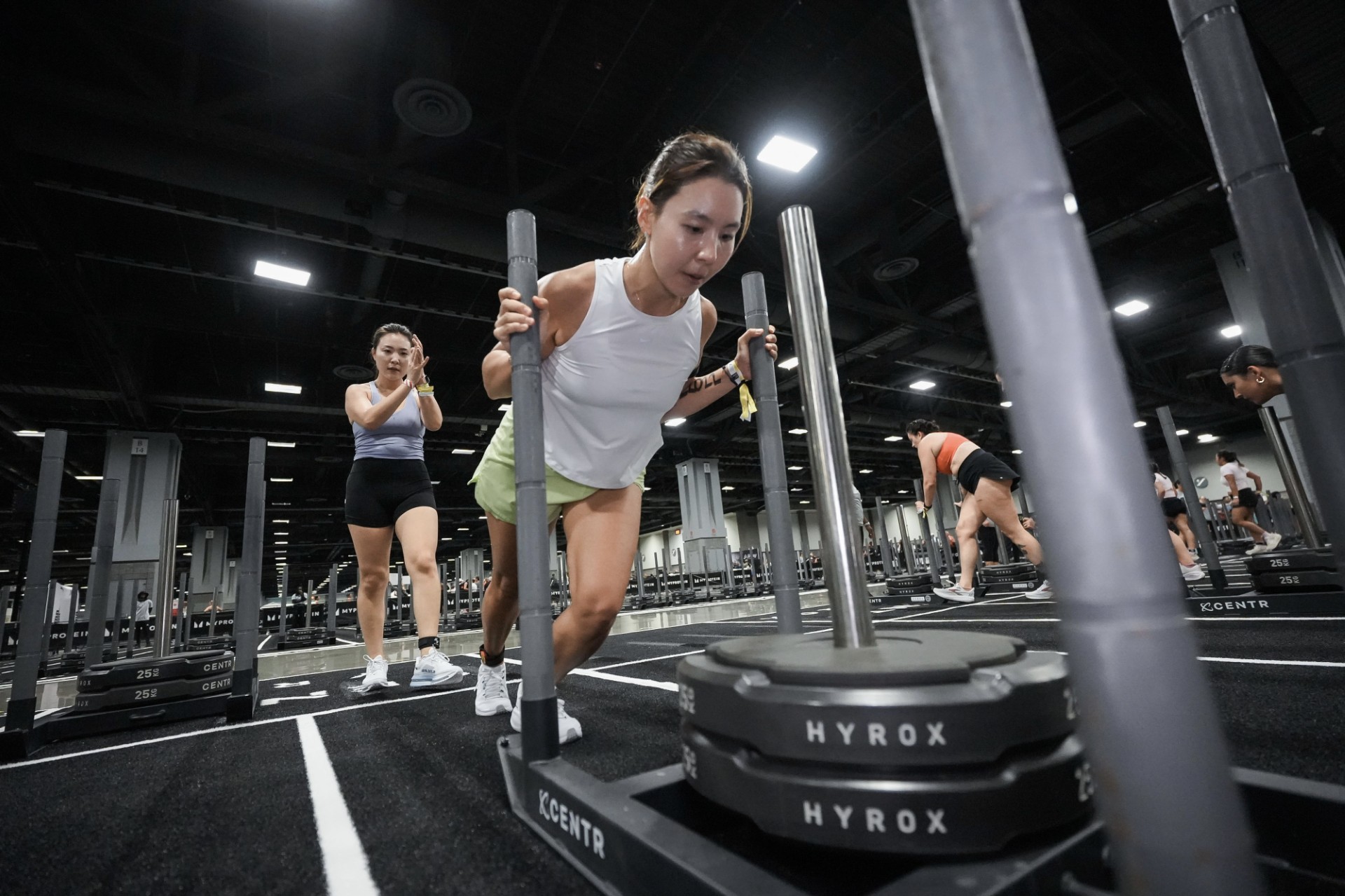
I finished my first Hyrox race last week in Washington, D.C. The race itself was brutal, but what I keep thinking about is everything happening around it. The music blasting through the convention center, strangers pushing past me and shouting encouragement in the same breath, everyone clearly there to test their own limits rather than beat the person next to them.
That’s actually a big part of why I signed up in the first place. There’s something about Hyrox where pros and amateurs, men and women, all show up to the same venue and compete on the same course, whether you’re chasing a personal best, doing it solo, racing with a partner, or just trying to prove to yourself you can finish. It doesn’t matter if you’re a serious athlete or someone like me who mainly wanted to see if I could do it. That mix is part of what makes it so appealing, and it’s probably why almost everyone who finishes posts about it right after.
I did exactly that, posting my own finish line photos on Instagram over the next few days. It was in the middle of that normal post-race routine when my friends started sending me DMs about a very different story out of Hyrox Beijing.
Joanna Wietrzyk, the Australian athlete who holds the women’s solo world record, suffered an involuntary bowel movement during the women’s elite race on September 12 and 13. She continued through all eight stations and went on to win her division. Footage and images of the incident spread across social media and fitness forums, with reactions ranging from praise for her determination to concerns about hygiene, safety and fairness to other competitors. She later posted what appeared to be a hospital bed selfie to her Instagram story, captioned “Go hard or go home they say… a win is a win,” before deleting it.
I’d just spent hours in that exact kind of environment, same equipment, same mats, same tight quarters as everyone else. Hyrox isn’t a marathon on an open city street where you’re mostly on your own. It’s indoors, and you’re sharing every surface with hundreds of other people. That distinction is the whole story here, and it’s what makes the response to Beijing worth taking apart.
Hyrox, Wietrzyk and her sponsor PUMA each had a real chance to show they cared about the community that built this sport. None of them fully took it.
Hyrox already had rules against minor infractions, littering on the course, spitting on the floor, but nothing for an actual biohazard. Its first statement said medical protocols had gotten “blurred,” language that read more like an excuse than an apology. The fuller statement was stronger. It called the community’s concerns “legitimate,” committed to taking responsibility, and asked people not to direct anger at Wietrzyk herself. But it took a second statement, this one from co-founder Moritz Fürste, before anyone actually admitted fault. He said plainly that it was his job to see something like this coming and he didn’t. The organization had already disinfected the area and changed the rules overnight by that point, which means the operational response moved faster than the public messaging did.
Wietrzyk isn’t just sponsored by PUMA, she’s a global ambassador who competes in the brand’s shoes built specifically for Hyrox, and she set her world record in them this past February. When social media users started commenting “Pooma” under PUMA’s own posts and calling on the brand to respond, the silence read as a choice rather than an oversight. Staying quiet may have felt safer in the moment, but it also meant PUMA never showed its own community it was listening.
Wietrzyk’s response is its own problem. Finishing the race while visibly affected, on shared equipment other competitors would use right after her, isn’t just a personal health matter. It involves everyone else on that course. Calling it “go hard or go home” afterward, instead of acknowledging what other athletes may have been exposed to, made the moment land worse than it needed to.
No single person or brand carries all the blame here. What this moment actually shows is how much of Hyrox’s growth has come from people sharing their own experiences and feeling like they’re part of something bigger than a workout. That same community was watching to see how Hyrox, PUMA and Wietrzyk would handle a situation that tested that trust directly. When all three responses came across as defensive, slow or simply absent, it chipped away at the thing that made people want to post about their race in the first place.
I love this stuff: the sponsorships, the marketing, the social posts, the whole culture around proving something to yourself through competition. And I get why winning through adversity is part of what makes sports meaningful. Serena Williams winning a Grand Slam while pregnant is still one of the most talked about moments in tennis. Alexander Zverev just won the US Open while managing type 1 diabetes, and it mattered enough that he spoke about it in his trophy speech. Those stories stick with people because the athlete was fighting something and won anyway, and everyone around them showed up for that.
What happened in Beijing isn’t comparable, and I don’t think Wietrzyk was trying to make it one. But it’s still timely for the same reason those stories are, because it’s about what we’re willing to call inspiring, and who’s actually accountable when the story stops being about one athlete’s toughness and starts being about everyone else on the course with her. For PR professionals working with fast-growing brands, live events, or athlete partnerships, that’s the distinction worth sitting with. Safety is the actual brand asset here, not the marketing. Speed and honesty beat deflection every time. And taking care of the people on the ground has to matter as much as protecting the brand’s image once something goes viral, because eventually it will.