What crisis communication framework does your team actually need?
Answers to the questions communicators most often ask preparing for a crisis.

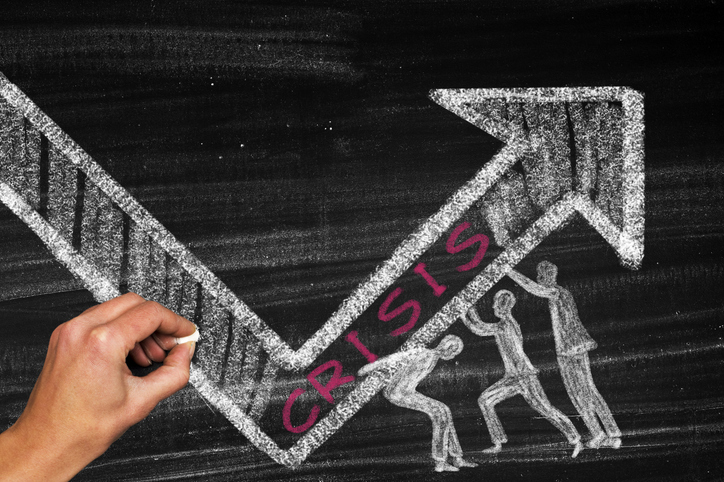
Looking for a one-size-fits-all crisis communications framework? You’ll never find it. A hospital system, a fast-food chain and a software startup all face different risks, different regulators and different audience expectations, so their playbooks should look different, too. But there are still commonalities every good crisis plan should have, regardless of industry: escalation triggers, defined roles, pre-approved message anchors, drills and a plan for evaluation.
This guide answers the questions communicators most often ask about building or updating a crisis framework.
What is a crisis communication framework?
A crisis communication framework is the structure an organization uses to decide how a crisis response happens, who needs to be involved, what needs to be included and when it should happen. It typically combines escalation triggers, tiered response plans and pre-approved messaging so a team is not starting from scratch under pressure.
What should a crisis communication framework include?
A strong crisis framework should include:
- A risk assessment that identifies where pressure is most likely to surface first.
- Tiered response plans, with pre-approved steps and messages for each severity level.
- Escalation triggers that spell out when additional teams, messages or executives get pulled in.
- Message anchors that can flex to a specific situation.
- Regular drills to ensure everyone knows how to apply the framework.
At APCO, severity gets scored with a scorecard first. Linda Barnhart, senior director there, told PR Daily that based on that score, a graduated response plan mapped to each level is implemented.
The strongest plans stay fluid rather than scripted, said Makini Nyanteh, chief communications officer at the American Institutes for Research. A modern playbook should define an organization’s risks, who leads the response and how decisions escalate, along with which audiences need updates, what messages are approved and how the team practices before a real crisis hits.
What are the first steps to building a crisis framework?
Start by identifying warning signs and closing the gap between what the organization says and what it does, rather than waiting for a full-blown crisis to force the plan into existence.
Most crises start with a missed warning sign or a weak explanation, not a single dramatic event, according to Gregg Feistman, professor of practice at Temple University’s Klein College of Media and Communication. That’s why that audit needs to happen before anything goes wrong, not after.
One of the most overlooked places that gap shows up is executive conduct. Executive crises are rarely sudden — they’re preventable failures that built for months or years while HR, legal and communications each treated the risk as someone else’s job. Building a framework means deciding, in advance, whose job it actually is.
How do you know an issue is turning into a crisis?
Communicators point to several early indicators worth building into a monitoring plan:
- An audience expanding suddenly.
- An issue jumping platforms, such as a video moving from one app into wider search or LLM results.
- A spike in comments or chatter on forums like Reddit.
- Employees repeating the same complaint or flagging unusual customer feedback.
How does AI change a crisis communication framework?
AI adds a new category of risk to plan for, and a new tool for preparing responses faster, but it does not replace the trust-building work that happens long before a crisis starts.
An AI incident response plan is no longer just an IT document. It belongs next to crisis protocols, according to Katelyn Ringrose, a Center for AI Strategy advisor. She told PR Daily it should include defined triggers, roles, language and guardrails for the moment a chatbot hallucinates a policy or a model exposes data it should not.
At the same time, AI can help a team prepare. As Danielle Grossman, director of communications at the Houston Livestock Show and Rodeo, put it to PR Daily, AI won’t predict your next crisis, but it can help you prepare for one.
Microsoft research covered by PR Daily found AI can help draft initial crisis statements and monitor sentiment in real time, based on similar past situations. The same coverage pointed to strategic thinking, ethical judgment and relationship management as the skills likely to matter most alongside it.
What happens after the crisis ends?
A framework should include a formal reflection phase that evaluates the response and feeds lessons back into the plan, not just a return to normal operations.
There’s a significant post-crisis phase that’s often overlooked, said Karen Naumann-Blevins, an adjunct professor in crisis communications at the University of West Virginia. Readiness and response get most of the attention in crisis training, she said, but going back to evaluate what worked, revise the plan and rebuild trust is just as important.
What is the single most important rule for any crisis framework?
Proportion matters more than speed alone. No framework can substitute for a sound underlying decision.
Response should scale to the situation rather than default to the biggest possible reaction, and measurement needs to track business impact alongside media coverage. Volume of coverage and actual damage do not always move together — a noisy situation may not need a big response if business metrics are still on track.
Brand strategy and communications executive Shrita Hernandez made a related point: when a crisis exposes a real organizational problem, no statement resolves it — communicators need a voice in the decision itself, not just the language around it.
Frameworks also earn their value through repetition, not paperwork. Tim Gilman, who leads external communications at Oshkosh Corp., illustrates the point with a team training to climb Mount Everest: their leader would randomly shout “pick axe,” and the climbers would instantly reach for it, building the muscle memory to respond instead of react once the real pressure hit. The same logic applies to a crisis framework: by the time it’s needed, the plan should already be automatic, not something the team is still figuring out in the moment.
Allison Carter is editorial director of PR Daily and Ragan.com. Follow her on LinkedIn.