Milan Laser’s CMO on learning the business before you bring the playbook
Christy Sherrick of Milan Laser has led marketing across four industries and shares the one skill that has transferred every single time.


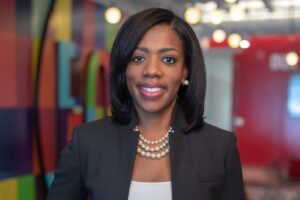
As Chief Marketing Officer at Milan Laser Hair Removal, Christy Sherrick steers marketing strategy across more than 400 locations nationwide, blending data-driven demand generation with brand leadership.
Sherrick is known for building lean, agile teams that can execute at enterprise scale without losing the creative edge that makes a brand memorable. Before Milan, she built the marketing function at Alliance Animal Health from the ground up. At Vail Resorts, she led brand and guest marketing efforts that sharpened the customer experience for skiers and vacationers alike. And at Mattress Firm, she helped engineer one of retail’s more notable turnarounds.
You’ve built marketing functions across wildly different categories: pet health, ski resorts, mattresses and now laser hair removal. What’s the one skill that has transferred every single time?
Learning the business before bringing the marketing playbook.
The categories have been wildly different, but the questions I ask are remarkably consistent: How does this business actually make money? What drives customer behavior? Where does growth come from? What constrains it? Where are we losing economics? If you understand those things, you can usually figure out what marketing needs to do.
The breadth has also become a bit of a superpower. Every category has its own playbook, and when you spend your entire career inside one category, it is easy to start treating those conventions as facts. I have the benefit of carrying mental models from one business into the next. Something completely normal in hospitality, retail, health care, or another service business can feel surprisingly nontraditional somewhere else.
The trick is not blindly importing tactics. It is understanding why something worked in another business and whether that underlying principle applies here. I think that combination of curiosity, business judgment and cross-pollination gives you an extra edge because you are not limited to the ideas your category has already agreed are possible.
Milan Laser operates across 400+ locations. What’s the biggest difference between marketing a single iconic brand and marketing a brand that has to work in hundreds of local markets at once?
The brand has to be national, but demand is incredibly local.
You need a very clear and consistent promise so Milan Laser means the same thing wherever someone encounters us. At the same time, the conditions underneath that brand can be completely different market to market. Competition is different. Awareness is different. Search behavior is different. Reputation and capacity can be different. Even the maturity of a location changes what the growth problem is.
So the job becomes building a system sophisticated enough to respond locally without fragmenting the brand into hundreds of different versions of itself. You need the scale and discipline of an enterprise brand, but you also need to understand the individual market well enough to know what is actually constraining growth and where the next dollar should go.
How have you navigated adversity, risk or difficult moments?
The hardest business experience was probably Mattress Firm. I was part of a small executive leadership team navigating a significant turnaround across thousands of stores.
What that taught me is that big business problems rarely live neatly inside one function. You have to come together across departments, stay extremely focused, test and learn, find the strongest ideas and run. You also have to stay very close to the economics and keep bringing people back to the few things that can actually move the business.
What is the most rewarding part of your job?
Building something that did not exist before and watching people grow beyond what they thought they were capable of.
At Alliance, one of the people I began working with as a director ultimately stepped into the head of marketing role when I left. I have watched versions of that happen across my career, and it is incredibly rewarding because the impact keeps going. The people you develop keep growing, and then they develop other people. That compounds.
What’s one thing you’re watching, reading or listening to that has nothing to do with marketing or comms?
Right now I’m reading “The Will of the Many.” I read a lot of fiction, actually, and that’s intentional.
I’m fairly intense when I’m working. My brain spends most of the day on business problems, data, strategy and decisions. If all of my inputs are also business books, articles and work-related content, I never really leave that mode. Fiction does something different for me. It pulls me completely into another world and stops me from trying to solve the problem sitting on my desk. Interestingly, I think that makes me more creative when I come back. Sometimes the most productive thing reading can do is get me out of my own head for a while.
What’s the most honest piece of advice you’ve gotten from someone who wasn’t a mentor or a boss?
It’s probably a few family phrases because they have become operating principles for me.
My dad used to say, “Do it now, young.” That gave me a real bias toward action. Do not let analysis, discomfort or a long to-do list become a reason to delay something you already know needs to happen. He also said, “Youngs never quit.” I took that as persistence. What I have added as an adult is that persistence does not mean defending the original plan. You can stay completely committed to the outcome while being willing to change the path.
There was also a strong “what if?” mentality in my family. What if there is another way? What if the thing everyone assumes is fixed actually is not? What if this could be bigger or better than it is today? I think that belief in possibility has stayed with me just as much as the phrases themselves.
Another phrase that has stayed with me is, “Stay curious longer.” Do not stop at the first plausible answer. Ask one more question. Keep listening. Be willing to find out that what you thought you knew was incomplete.
And my father-in-law used to say, “Hard work is the great equalizer.” You cannot control whether you are the smartest person in every room or whether every opportunity breaks your way. You can control effort, preparation and persistence. The addition I have made to that one is sustainability. Working hard matters enormously, but burning yourself or your team out will not get you to the end goal.
Act. Persist. Believe in possibility. Stay curious. Work hard. Those ideas probably explain a lot of how I operate.
Isis Simpson-Mersha is a conference producer/ reporter for Ragan. Follow her on LinkedIn.