The Scoop: Ferrari tries to message electric car as market value plunges $5 billion
Plus: BP ousts chairman while proclaiming stability; Spencer Pratt’s campaign for LA mayor has new media twists.

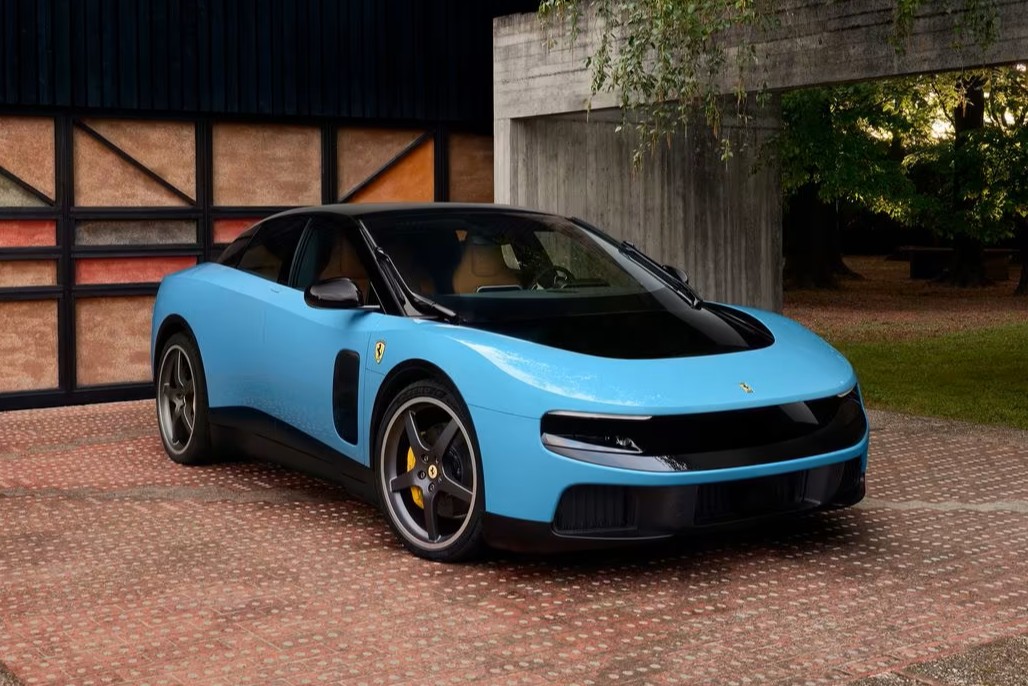
Ferrari debuted its first electric vehicle, the Luce — Italian for “light.” Designed by storied Apple alum Jony Ive, the four-door, five-seat car can reach 60 mph in 2.5 seconds.
The starting price: $640,000.
In an exclusive interview with CNBC, Ferrari CEO Benedetto Vigna noted the Luce was meant to appeal to existing clients, but also bring in new ones who might not have considered buying a Ferrari in the past.
“We are convinced that a company demonstrates its leadership when it has the courage to dare and to take on the challenge of new technologies,” Vigna said in a press release, which describes the Luce as the company’s first step toward creating “an entirely new Ferrari.”
The problem: no one appears to like it.
Online, consumers have shared memes mocking its design. Some have compared its look to the Nissan Leaf, which costs much less.
Left, Ferrari Luce $645k
Right, Nissan Leaf $35k pic.twitter.com/2PtrCrgnDW— Tommy (@_TommyMason) May 25, 2026
Amid the jokes, Ferrari shares have fallen, erasing around $5 billion in market value.
Why it matters: On one hand, Ferrari can ignore the noise online. The brand caters to a select group of consumers who often buy more than one vehicle. Chances are someone making a snide comment on Reddit about the Luce can’t afford to purchase one, anyway.
And Ferrari appears ready to confront the backlash.
On LinkedIn, Vigna posted the following: “We need to bear in mind that true innovation does not look for immediate consensus, nor does it stem from the ordinary. Radical breakthroughs inherently challenge the status quo. With the Ferrari Luce, we did not simply adapt our DNA to new technology; we re-imagined the future from a completely blank canvas.”
On the other hand, part of the thrill that comes from owning a Ferrari is knowing most people never will. It’s a status symbol that conveys wealth, success and exclusivity.
It’s worth noting that Ferrari is still selling the splashy, gasoline-powered cars it’s known for. Those aren’t set to disappear. However, how strangers online perceive Ferrari matters. If the brand’s aspirational reputation diminishes among the general public, some of the social value attached to owning one declines with it.
It’s a bold risk. Will it pay off?
Editor’s Top Reads:
- Oil giant BP removed its chairperson, Albert Manifold, following “serious concerns” related to “governance standards, oversight and conduct,” according to a press release. While the statement didn’t go into details, the Wall Street Journal reports Manifold allegedly bullied employees and mishandled sensitive company information. While the release praised Manifold, saying he “helped bring a welcome focus and pace” to the company, in an email to Bloomberg, Manifold defended himself: “I was removed without warning and without explanation,” he wrote. “I dispute entirely the characterization of my conduct and I will not allow a false narrative to go unchallenged.” BP shares fell following the news of Manifold’s ouster even as the London-based company tried to emphasize the positives in its press release of Manifold’s sacking. It noted that BP is “building a track record of strong underlying operational performance and a tight focus on financial discipline — all in the pursuit of growing shareholder value and returns.” It also praised CEO Meg O’Neill, who started the job in April, for her “bold action to simplify and strengthen the organization.” While firing a chairperson for unclear reasons will always signal instability, BP has attempted to alleviate investor concerns by dedicating most of its statement to showcasing the company’s health. However, the stock price remains down nearly 10% since the announcement as of Wednesday morning.
- Reality TV villain and social media personality Spencer Pratt is campaigning to be the next mayor of Los Angeles. Somes of his tactics, such as reposting AI-generated videos made by fans, differ from those of his opponents. The Hollywood Reporter notes that while his rivals, such as incumbent Karen Bass, continue to buy ads on print, radio and TV, Pratt is investing in clipping, the practice of making short videos from longer content found on podcasts, livestreams and YouTube videos to spread on social platforms. Campaign records show Pratt has spent more than $55,000 on clipping services. The New York Times also reports Pratt’s campaign hasn’t purchased a single minute of TV or radio airtime. His rivals, meanwhile, have invested nearly $2 million on traditional commercials. Given that Pratt’s polling in second place behind Bass and seeing donations surge in recent weeks, his campaign offers more evidence that so-called mainstream media is no longer mainstream. Whether all the attention turns into votes is another question. But, as every PR pro knows, getting attention is a good place to start.
- To increase its visibility on AI platforms such as Gemini and ChatGPT, supplement maker Olly is trying a few different tactics, reports Modern Retail. “One of the first things we did was rewrite our Wikipedia page,” said Jennifer Peters, Olly’s director of DTC, marketing technology and digital compliance. “No one had touched it in about eight years, so it was outdated and old.” Other strategies include beefing up educational blog posts on its website and expanding each product page with an FAQ section that clearly lists the ingredients. “We are most focused on what we own and what lives on our domain,” Peters said. As more consumers research goods and services on AI platforms, it’s becoming more important for brands to show up there, too. The challenge is knowing how to do it, and how to keep doing it as models evolve.
Paul Hiebert is a reporter for PR Daily and Ragan Communications. Follow him on LinkedIn.