The Scoop: Warren Buffett says goodbye in very human signoff
Plus: Texas coach, Arch Manning apologize; Robert Kraft announces $2 million donation.

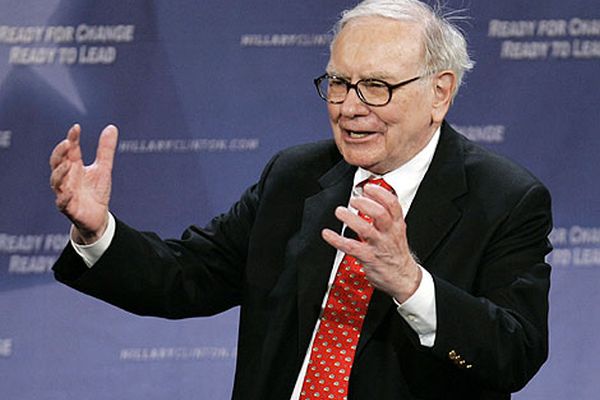
Warren Buffett is stepping down as chairman of Berkshire Hathaway.
He will remain on the board, while his son, Howard Buffett, takes over as chairman. Greg Abel, who succeeded Buffett as CEO at the beginning of this year, will continue running the company.
Buffett announced the move in a short letter to shareholders Friday morning.
“I have served Berkshire since 1965. Sixty-plus years in, I still have the best job in the world,” Buffett wrote. “That is not something many people my age can say, and I have never felt better about what comes next.”
A big reason for that confidence is Abel, he said.
“My expectations for him were sky high from the start, and he has exceeded them,” Buffett wrote. “Abel has been making the decisions that matter for some time now.”
Buffett was equally direct about how leadership will work going forward, saying, “Greg runs the company; Howard will guard its culture and values – both worth more than anything on our balance sheet.”
He ended with an acknowledgment of why, at 96, he is finally ready to give up the chairmanship.
“Father Time always wins,” Buffett wrote. “He has, however, been generous with me.”
Why it matters: Buffett’s letter beautifully accomplishes everything it should, which is to remove all uncertainty.
When a longtime leader leaves, particularly one as closely tied to a company’s identity as Buffett, stakeholders want to know who has authority, whether the outgoing leader trusts that person and if the organization they know will fundamentally change.
Buffett answers those questions in plain language.
He assures that Abel is already doing the job and has his full confidence. He also names the person responsible for protecting Berkshire’s values and makes the distinction between those roles clear.
The letter also sounds like Buffett as he jokes about his age, talks directly to shareholders and uses an insurance analogy to explain Howard’s role, writing, “Think of Howard as a policy the shareholders own and hope never to claim against.”
During change, communicators don’t need to address every unknown about the company’s future, but they should make the immediate future clear with who’s in charge, what they’re responsible for and why stakeholders should trust what comes next. Buffet does it well in a short and sweet signoff.
What fueled the Arch Manning, Texas football backlash?
Texas football coach Steve Sarkisian apologized for his interaction with ESPN reporter Holly Rowe that later spiraled into an AI controversy involving quarterback Arch Manning.
After Texas’ comeback win over Ohio State, Rowe attempted to interview Sarkisian, but the coach cut her off and walked away.
“If hindsight’s 20/20, if I could do it all over again, I would have exuded more patience in that moment and sat through and waited for the interview with Holly,” Newsweek reports Sarkisian said. “I have a ton of respect for ESPN and Holly…I could have definitely handled that situation better.”
Social media users then created AI-altered videos of the exchange, including one showing Sarkisian slapping Rowe. Manning referenced the fake video during a press conference, laughed and called it “hilarious.”
He later apologized.
“There is nothing funny about it,” he said. “I need to do better and will be more thoughtful going forward.” Rowe accepted the apology.
Sarkisian also addressed Manning’s comments: “In no way do we condone domestic violence or violence against women.”
Sarkisian’s response acknowledged his role in the original interaction while addressing the AI video and reinforcing the organization’s values.
Communicators can’t control AI fakes, but they can prepare spokespeople to recognize that joking about or amplifying manipulated content can turn something false into a real reputation problem.
Why is Robert Kraft pledging donations?
The public fallout between Macklemore, Ed Sheeran and Robert Kraft has moved to competing humanitarian donations.
Macklemore said he will donate $1 million to six organizations supporting Palestinians. He then challenged Kraft to match him.
Kraft responded, stressing that his commitment wasn’t prompted by Macklemore. He said on X that Sheeran already asked him to commit $2 million to match Sheeran’s own $2 million donation.
“I have dedicated much of my life to building bridges between all people,” Kraft wrote. “I believe deeply that all lives are worth protecting.”
While donations can show that values statements are backed by action, audiences also judge motive, particularly when generosity follows a crisis.
Kraft emphasized that his pledge came before Macklemore’s and pointed to his previous work supporting Palestinians and Israelis. But his statement didn’t identify where the $2 million would go.
This whole thing shows that timing and perception are important. In a heated moment, people want to know what prompted the action. Here it seems to be a contest about who pledged more money first, which looks ingenuine and reactive. It would have landed better if Kraft was upfront about where money is going and why he felt compelled to give now.
Why are Amazon/Walmart facing backlash over their AI shopping agents?
Amazon is pushing back after two U.S. senators called for an FTC investigation into claims that AI shopping assistants from Amazon and Walmart suppress information about American-made products and fail to flag falsely labeled goods.
Reuters reports Sen. Tammy Baldwin and Sen. Rick Scott examined Amazon’s Alexa for Shopping and Walmart’s Sparky. In one test, Alexa was asked why Amazon didn’t offer a “Made in USA” filter and reportedly answered that doing so would “redirect significant sales away from their largest seller base,” referring to overseas manufacturers.
Amazon firmly rejected this.
“The suggestion that we intentionally withhold country-of-origin information from customers is fundamentally wrong,” a spokesperson said. “Alexa for Shopping is a continuously improving service and to prioritize accuracy, we currently direct customers who ask about country of origin to product detail pages.”
Walmart did not immediately respond.
Amazon kept its statement short while emphatically denying the claims. They followed up with information about the service and how it directs people. They didn’t necessarily clarify every detail, but they were succinct and clear with a quick response, which may be the most important step in managing the narrative when scrutiny arises.