The secret to Pure Michigan’s ongoing success
The travel campaign celebrates 20 years of bringing visitors to the state.

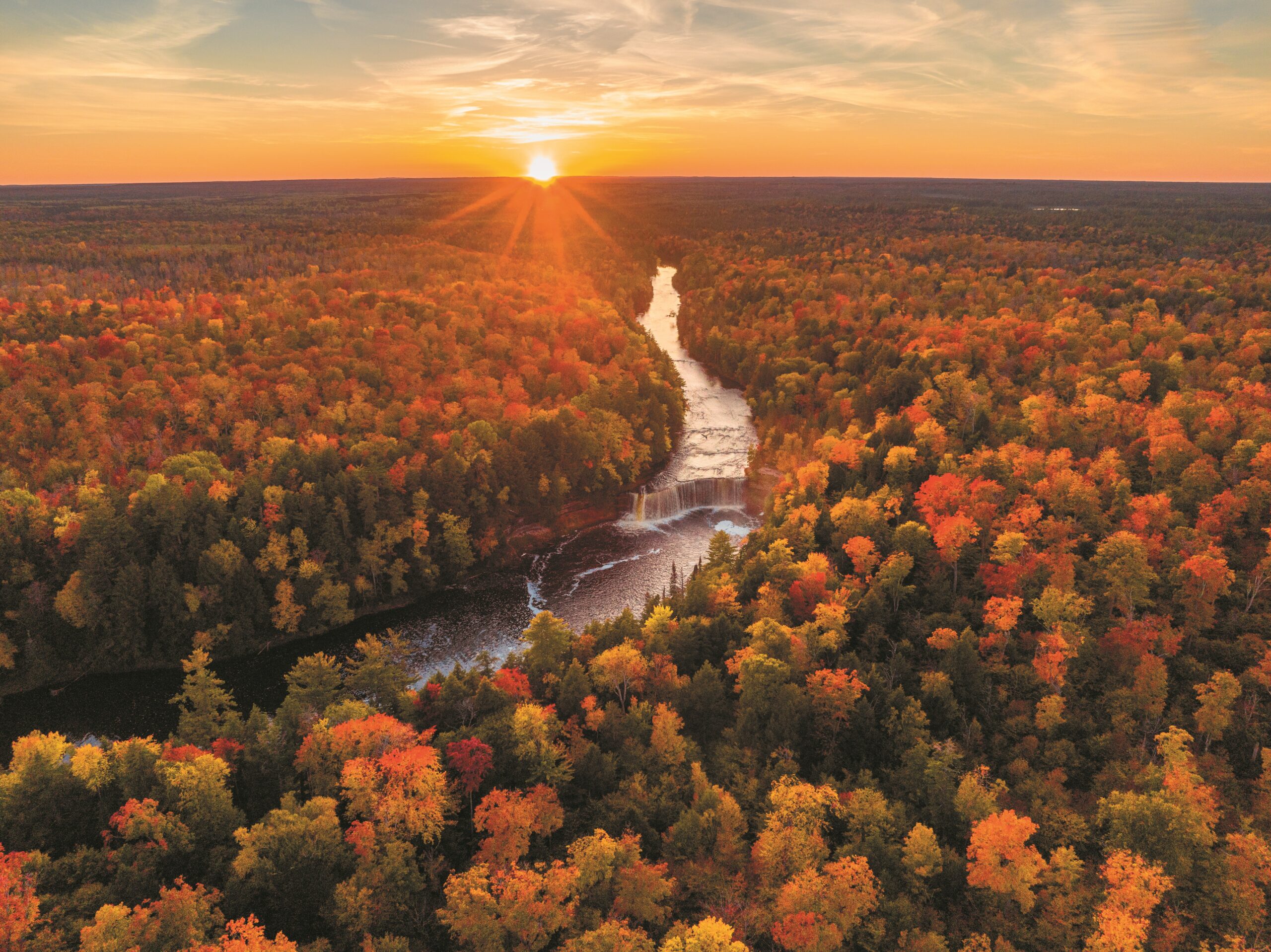
Unlike marketing a product or service, which can be created and changed, marketing a place means you have to work with what you’ve got.
Fortunately for Michigan, the state has a lot.
“What differentiates Michigan is the sheer scale and diversity of the experiences across our two peninsulas,” said Kelly Wolgamott, vice president of Pure Michigan, which is part of the Michigan Economic Development Corporation.
Wolgamott mentioned 3,200 miles of Great Lakes coastline and the energy of cities like Detroit and Grand Rapids to illustrate Michigan’s range of options for visitors.
By remaining focused on local people, small businesses and natural landscapes in all four seasons, Pure Michigan, the state’s official travel campaign, has grown from a regional marketing push in 2006 to a major award-winning brand 20 years later. Last year, for example, Fast Company included Pure Michigan on its list of “Brands That Matter,” alongside heavyweights such as Nike, Coca-Cola and McDonald’s.
And it’s achieved this by staying true to what the state has to offer.
“From day one, Pure Michigan has never been about manufactured moments or overpromised experiences,” said Wolgamott, who has been part of Pure Michigan since 2011, when she joined as director of marketing.
An ad from 2007 titled “25,000 Mornings” helped set the tone for what has followed. In the 30-second spot — narrated by Michigan-raised actor Tim Allen — soothing music plays over images of the sun rising above homes and bodies of water as Allen notes people only get around 25,000 mornings in their lifetime. “If we get lucky, really lucky, it dawns on us to go spend them in a world where a simple sunrise can still be magic,” Allen says in the commercial.
Adam Stoker, president and CEO of Brand Revolt, an agency that works with destination marketing organizations, agreed that much of Pure Michigan’s success comes down to consistency.
“They’ve brilliantly stuck with the message throughout the years, which has truly built lasting brand equity,” said Stoker. “There’s no question Pure Michigan has elevated the state’s image and reputation worldwide.”
The heightened profile has helped attract more tourists — and money.
In 2025 alone, Pure Michigan reported it generated $10.78 in state tax revenue for every dollar it invested in paid media. Travelers aware of Pure Michigan, meanwhile, stayed 4.4 nights, while those unaware of the campaign stayed 3.9 nights.
For the residents of Frankenmuth, a small city that dubs itself Michigan’s Little Bavaria for its German heritage and architecture, Pure Michigan has made a big difference.
“People don’t relocate their businesses or their homes without visiting first,” said Jamie Furbush, president and CEO of the Frankenmuth Chamber of Commerce and Convention and Visitors Bureau. “This campaign really helped set the stage for a lot of economic growth.”
Overall, tourism contributes $50 billion to Michigan’s economy each year, supporting more than 350,000 jobs across the state.
While Pure Michigan’s commitment to authenticity has remained unchanged for two decades, the team behind the campaign has been busy keeping up with the times to ensure its message continues to reach consumers. This means running expanded advertising campaigns across social, connected TV and various digital channels.
It also means partnering with influencers and creators to connect with younger consumers who weren’t around 20 years ago.
View this post on Instagram
The increase in people planning trips on ChatGPT is another recent development that requires Pure Michigan to adapt its approach. When a potential traveler queries an AI chatbot for “the best freshwater sunsets” or “a family-friendly fall road trip,” for example, Pure Michigan wants to show up.
“We understand that travelers are turning to AI to help determine vacation spots and iron out itineraries, so we are focused on ensuring that Michigan’s destinations, hidden gems and local businesses are prevalent and accurately represented within those AI-driven searches,” said Wolgamott.
At its core, Wolgamott added, promoting the state of Michigan isn’t all that different from promoting any great brand. The aim is to build emotional connections and tell compelling stories that inspire people to act.
What’s different, however, is that Michigan isn’t something a small group of designers and strategists invented over Teams. Leaning into this difference has made all the difference.
“Michigan isn’t a product we manufactured,” said Wolgamott. “It’s a place full of real people, communities and experiences that change with every season and every traveler who visits.”