Dow Jones CCO on safeguarding reputation amid threats from all sides
Coverage from Ragan’s Future of Communications Conference.

Some days, it feels like attacks to a brand’s reputation are coming from all quarters. Social media, deepfakes, even the United States government — all can chip away at how the public perceives any given brand.
For an organization like Dow Jones, protecting trust in your brand is of paramount importance.
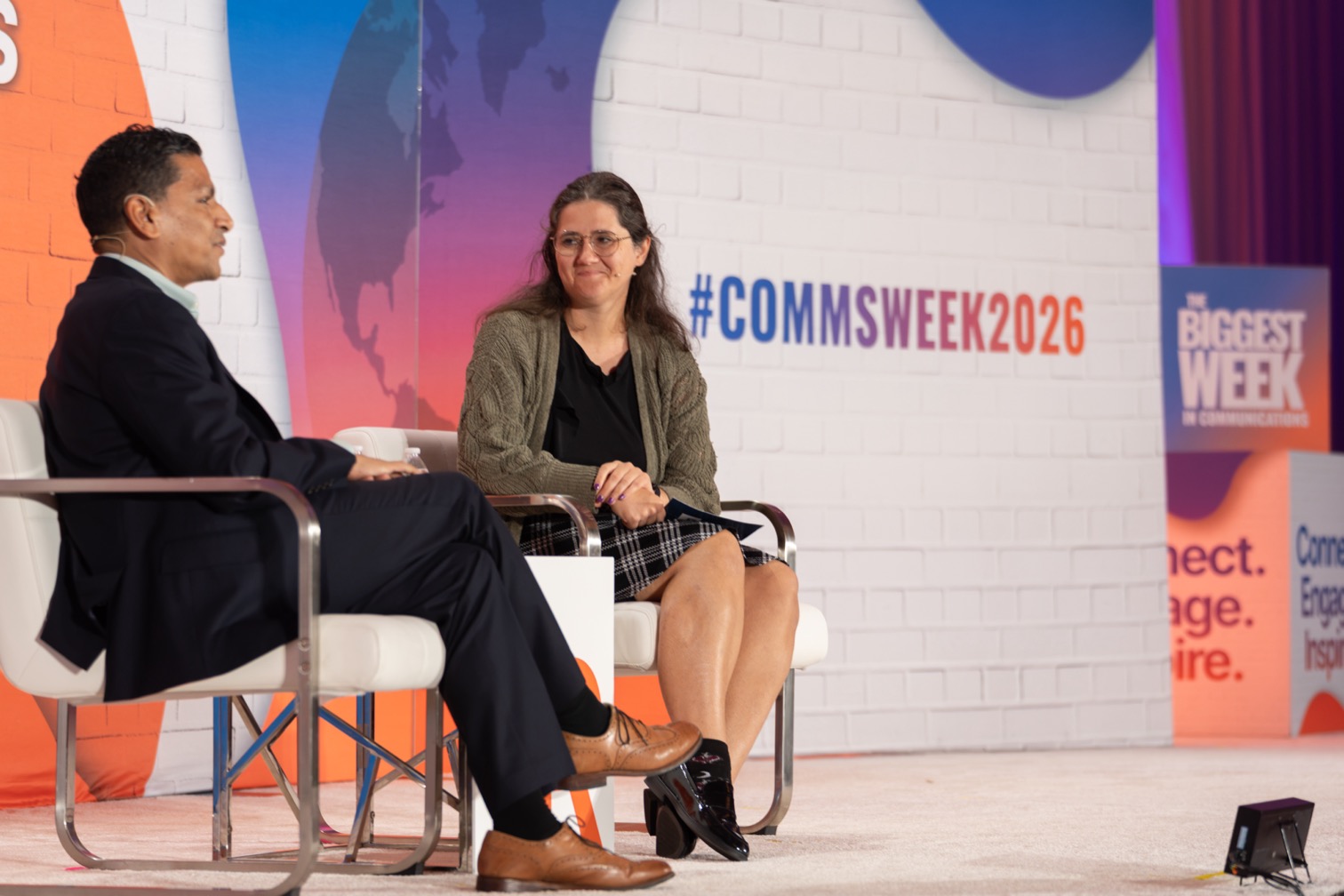
“Our brands stand on the strength of their reputation,” said Ashok Sinha, chief communications officer of Dow Jones, during the closing fireside at Ragan’s Future of Communications Conference. “So that means that it is even more important than ever before to be able to protect it.”
Dow Jones owns several financial publications, including The Wall Street Journal, Barron’s and MarketWatch and also has a powerful research and data wing.
Without trust, all the work Dow Jones does is thrown into question.
“In this day and age, when information is coming to people from so many different places, reputation is more difficult now than ever before to steward. I will also say, conversely, it is now more important than ever before to do exactly that.”
Pick your battles
When threats seem to surround you, you have to pick which ones are really worth addressing. With so many tools for listening, communicators need to truly understand which are worth heeding and which are just noise.
“It’s impossible in this day and age to go after every single dissenting voice or every single perspective that differs from your own,” Sinha said.
Instead, take the time to identify not just what the criticism is but who it’s coming from.
“These are the loudest voices, these are the most influential voices, these are the ones that we should make sure that we’re engaging with to make sure that we’re protecting our reputation,” Sinha explained.
Understanding which criticisms fall into which categories is often determined by a combination of smart communicators armed with good tools — even if the tech isn’t fully caught up in this arena yet.
“I believe our ability as communications people to look around corners will be more vital than ever, and so it’s really difficult to develop tools that can really do that,” Sinha said. “But I think those are the kinds of tools that I’m really interested in moving forward.”
Build your defenses
The best way to defend a reputation is to already have a great one, based in trust and ethics.
“Being able to point to your reputation as a legacy brand, being able to rest on the quality of what you’re offering from an information perspective, will be more important than ever,” Sinha said.
In this, Dow Jones has both a rare leg-up and a challenge. It shares a name with the major stock index in the United States, though the two organizations are no longer linked. But it does give them a vague idea that the company has something to do with finances. At the same time, distinguishing the publications from the index is still tricky.
“The opportunity to help build that link from a reputational perspective between our brands and the overall Dow Jones brand was one that I found really interesting,” Sinha said.
What comes next
Sinha is optimistic about what lies ahead. He sees AI taking tactical work like briefings and first drafts off communicators’ desks, which frees them to build the relationships that sustain that all-important reputation.
“Our primary ability as communicators is human interaction, the ability to build relationships, the ability to leverage those relationships, the ability to tell a story in a human way,” Sinha said. “I don’t believe that’s ever going to go away.”