The college brand crisis: 5 strategic moves higher ed leaders must make now
Generic messaging doesn’t work.
Robert Wynne is president of Wynne Communications.
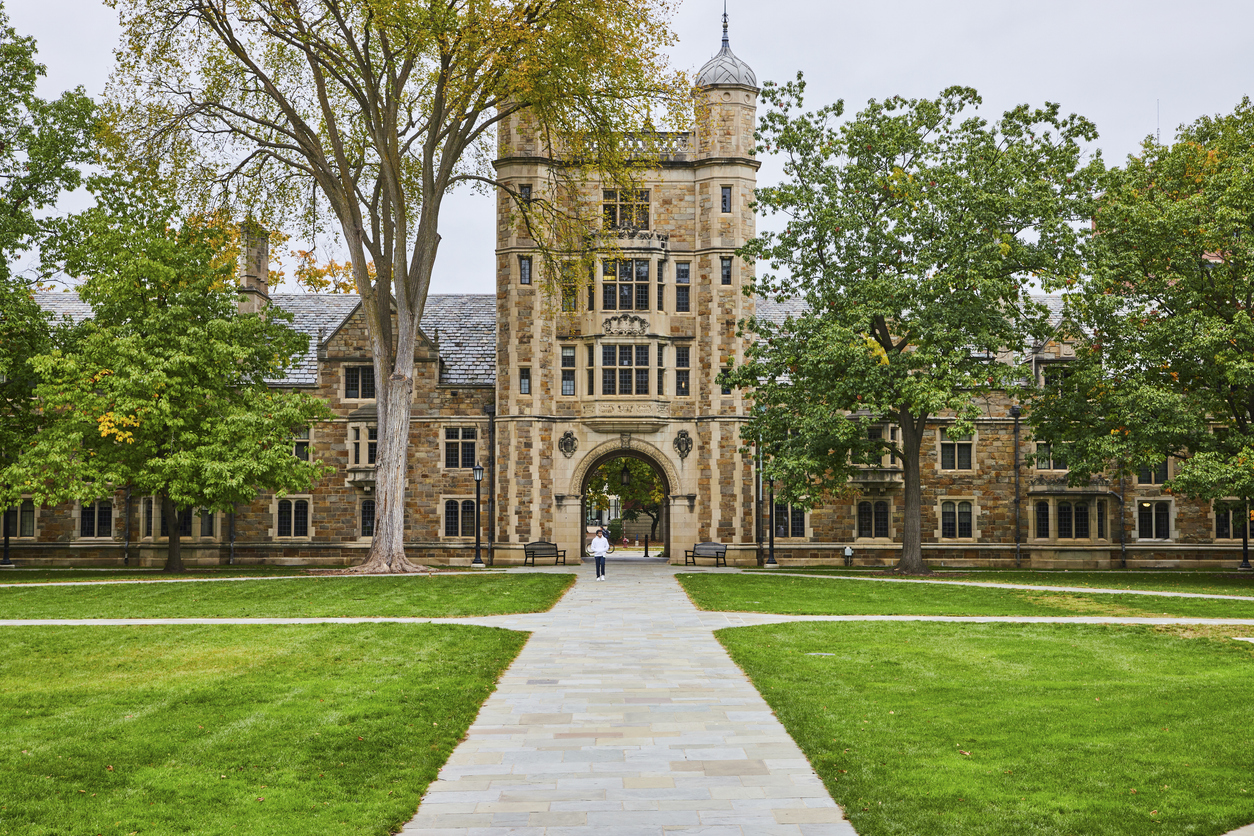
Every spring, college marketing teams sink seven-figure budgets into identical campaigns: golden-hour shots of brick walkways, a circle of laughing students huddled over a MacBook and stock taglines like “Find Your Purpose, Shape Tomorrow” or “Where Leaders Are Made.” If you swapped the university crest in the corner, nobody would notice which school was being promoted.
Generic messaging doesn’t work. Facing demographic cliffs, mounting skepticism over degree ROI and competition from flexible credentials, institutions can no longer afford to treat branding like a fresh coat of paint. A new slogan won’t solve an enrollment slump if you can’t answer the most pressing questions on a family’s mind: Why here? And why does this degree cost what it does?
If your leadership team wants a brand that packs a punch, start with these five strategies:
- Stop dodging the price tag — prove the payoff
Families aren’t asking for slicker brochures; they’re running the math. Deflecting tuition anxiety with vague promises about “transformational journeys” makes schools look out of touch. Meet the cost question head-on with hard numbers and clear career outcomes:
- Where are your graduates working three, five and 10 years out, broken down by major?
- What concrete doors do your faculty and alumni actively open for internships?
- How many students graduate with practical, portfolio-ready experience versus just credit hours?
Affordability matters, but perceived value matters more. When you connect the cost of tuition directly to tangible career traction, price stops looking like an obstacle and starts looking like an investment.
2. Pick two things to be famous for
The fastest way to dilute a college brand is internal campus politics: Every dean demands equal real estate on the homepage, leaving marketing to promote everything at once. But claiming to be world-class at everything signals you are distinctive at nothing. Powerful positioning requires ruthless prioritization.
When I led communications for the USC Marshall School of Business, we stopped trying to highlight every department. Instead, our top priority became the PRIME program, which required all first-year MBA students to study internationally. The result? Front-page features in more than 20 major media outlets. That coverage anchored our outreach to recruiters, prospective students and alumni, propelling the school into the top 25 in both U.S. News & World Report and BusinessWeek for the first time.
At Menlo College — long perceived primarily as a feeder school for Stanford and UC Berkeley — we discovered more than 100 members of the Saudi royal family, including three princes on campus at the time, were alumni or current students. Highlighting that remarkable network brought immediate global recognition.
The lesson applies everywhere: Internal politics aside, what truly makes your institution unique? Pick two undeniable strengths and lean into them relentlessly. You need an unmistakable anchor that gives donors, employers and prospective students a compelling reason to pay attention.
3. Build different front doors for different audiences
A 17-year-old choosing where to spend the next four years is looking for independence, identity and community. A 34-year-old nurse returning for an advanced degree is looking for evening classes, transfer credit policies and whether coursework fits around childcare.
Yet most university websites force both visitors through the exact same user journey. If an adult learner has to click past intramural sports, dorm tours and dining hall photos just to find the evening course schedule and net price calculator, they will leave and enroll somewhere easier to navigate.
Stop organizing external communications around internal academic silos. Structure your messaging around the specific life stages, anxieties and goals of each audience you serve.
4. Give in-person and online distinct, defensible rationales
For years, higher education treated online degrees as a discount compromise and residential programs as the “authentic” standard. Both assumptions are outdated. Instead of positioning online study as a fallback, define each format by what it does best:
- Online isn’t just convenient; it allows working professionals to apply classroom concepts directly to their jobs the next morning without uprooting their lives.
- On-campus isn’t just “the college experience”; it offers high-stakes collaborative lab work, studio critique, structured mentorship and networks forged through daily proximity.
When institutions articulate the unique pedagogical strengths of each format, prospective students stop viewing delivery methods as trade-offs.
5. Put your faculty where people actually look
Colleges sit on an unmatched pool of subject-matter expertise, yet most of it remains trapped in journals, committees and departmental newsletters no one reads.
When an economics professor explains a volatile housing market on prime-time news, or an engineering director breaks down battery supply chain bottlenecks in an op-ed, they build institutional credibility that paid ad campaigns cannot buy.
Stop treating thought leadership as an accident. Identify faculty who can translate complex research for a general audience, prepare them for media appearances and proactively pitch their perspectives into current national debates. Institutional reputation flows directly from the visible authority of the people teaching in the classroom.
Billboards, search ads and redesigned viewbooks are distribution channels. If your underlying value proposition is muddled, spending more money on those channels just amplifies the confusion.
The institutions that thrive over the next decade won’t necessarily be the ones with the largest ad budgets. They will be the ones willing to make hard choices about who they are, back their claims with verifiable outcomes and treat prospective students like discerning adults.